Lean Safety: Why the Most Efficient Factories Are Also the Safest
The myth that efficiency and safety are mutually exclusive still exists in many factories. The assumption is that improving one compromises the other. Can we work efficiently while maintaining occupational health and safety? When done right, Lean safety actually enhances both.
In fact, worker injuries are a form of waste just like overproduction, excess motion or waiting. And they are costly. Research shows that preventable workplace injuries in the US are estimated to cost employers $176.5 billion a year. That’s a huge waste of resources that could be invested into value-added activities!
The Overlap Between Safety and Lean Thinking
This is the promise of Lean when it comes to safety: when you streamline your processes and eliminate waste, you create safer environments and boost your productivity at the same time.
The core principle of Lean — respect for people — means creating systems that work for everyone, workers included. Improvements shouldn’t benefit just the business, but the people who work there. And that includes keeping them safe.
In Lean terms, an injury is a form of muda: losing time, money and resources because a worker is off the job or because production is delayed. When your Lean efforts lead to safer, smoother operations, you prevent waste, boost efficiency and protect your most valuable asset, your workforce.
Lean Tools That Naturally Improve Safety
5S: A Clean Workplace Is a Safe Workplace
One of the most foundational Lean tools, 5S (sort, set in order, shine, standardize, sustain), focuses on creating an organized, efficient and safe work environment. It’s often referred to as the starting point of any Lean transformation and for a good reason: keeping a workplace clean and organized doesn’t cost much and it directly impacts safety. Here’s how:
- Sort: Remove what you don’t need. Less clutter means fewer trips and falls.
- Set in order: Put tools and materials within easy reach. Less searching, less reaching over a colleague’s shoulder.
- Shine: Clean and inspect as you go. You’ll catch oil spills and broken tools before they cause injuries.
- Standardize: Build cleaning and safety checks into the daily routine.
- Sustain: Review 5S practices regularly. Discipline from everyone turns new habits into the norm.
Kaizen: Small Changes, Big Safety Wins
The practice of continuous improvement has long been a key principle of Lean. But when applied to safety, Kaizen can have an even more powerful impact. By empowering workers to suggest and implement small, low-cost safety improvements, Kaizen fosters a culture where safety is part of the daily process rather than something checked off once a year.
Workers themselves often know best what safety risks their work poses. For example, according to IISE, a team at Volkswagen's plant implemented an idea of a worker who had sore hands when installing baffles. The baffle clips required high push force to install while the worker held the metal part. So, the team added a lever arm to press the clips and a stand to hold the part. This reduced the force required by 40% and boosted productivity by 50%.
Standardized Work: Making Safe the Default
In Lean methodology, standardized work means developing a uniform method for completing tasks. This contributes to both efficiency and safety. When everyone follows the same best-known procedure, it ensures that critical safety steps aren’t skipped.
At manufacturing plants, standardized work instructions ensure every worker follows the same safety steps, like using lockout protocols before fixing machines. This reduces different approaches to safety practices and as a result, there are fewer injuries and near-misses.
Poka-Yoke: Preventing Injuries
Poka-Yoke is all about designing processes or equipment to stop mistakes before they happen. When it comes to safety, this means adding features that prevent workers from making errors that could cause injury. For example, machine interlocks are used to make sure a machine can't operate unless all safety conditions are met.
“By locking out energy sources and tagging out the equipment, you can be 100% certain there’s no way to accidentally switch on the machine. Only the person who locked the machine out can unlock it. This protects both your people and your machines. A paper sign saying: "DO NOT START, WORK IN PROGRESS" on the switch is really not enough,” states Jakub Myska, the owner of Lean Industry, a company focused on implementing Lean principles in manufacturing.
Visual Management: Safety at a Glance
Visual management is a powerful Lean tool that uses signs, color codes, floor markings and other visual cues to make the workplace more intuitive and safer. In the context of safety, this means using visuals to highlight hazardous areas, emergency exits or safety equipment.
Color-coded floor markings help workers quickly distinguish between pedestrian and vehicle traffic paths, preventing collisions. Apart from visual indicators, you can protect your workers by monitoring movement through these areas. You can automatically trigger alerts, restrict access, slow down forklifts when a person is nearby, or even switch off a machine when an unauthorized person gets too close.
Gemba Walks: Spotting Hazards Where They Happen
Gemba Walks allow managers and team leaders to observe how work is being done and identify potential safety hazards. Sidney Dekker, an expert on human error and safety, explains that safety is all about the difference between how work is planned and how it's actually carried out. Gemba can help you identify and address this gap.
For example, during a Gemba walk, a manager might notice that workers aren’t wearing proper protective gear. After talking to the workers, the manager learns that the gear takes too long to put on. Workers might suggest a more efficient way to improve safety.
Total Productive Maintenance (TPM): Quick Check, Fewer Breakdowns
TPM focuses on keeping equipment in top condition to prevent breakdowns and ensure everything runs smoothly. Regular machine maintenance, morning checks, and passing on ownership of machines to workers all help prevent accidents caused by equipment breakdowns. Regular checks make sure safety devices work properly and lower the risk of injuries from unexpected breakdowns.
solution
Connected Worker
With the new layer of data, forklifts, machines and systems can instantly react to workers’ location and adapt to it. An effective way to prevent accidents without adding any extra work.

Real-Life Stories of Minimizing Waste While Improving Safety
Let’s take a closer look at a few of our customer stories that perfectly demonstrate how real companies cut waste and protect their teams at the same time.
Improving Ergonomics and Intralogistics
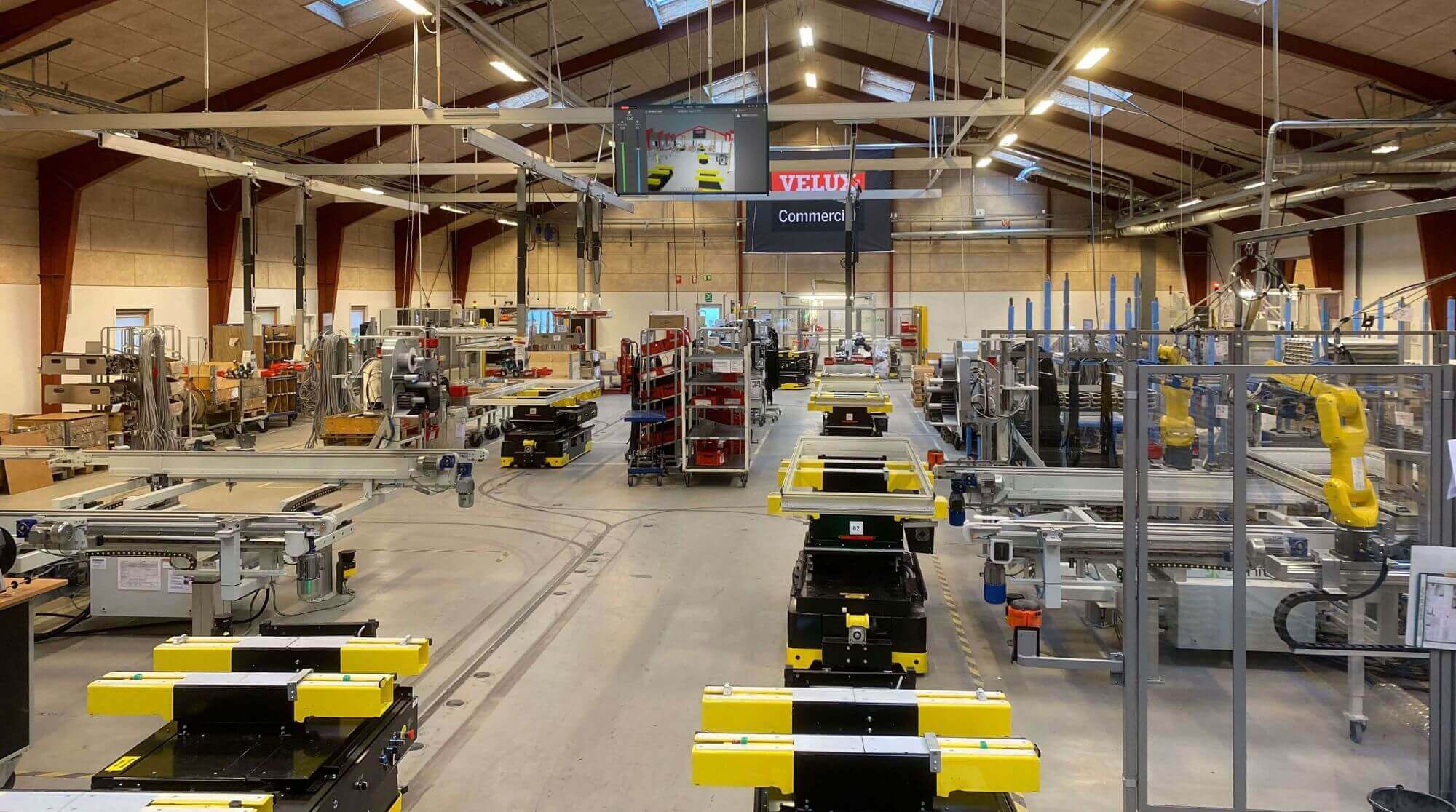
Velux Commercial, a Danish window manufacturer, uses Automated Guided Vehicles (AGVs) with grippers to transport window frames around the shop floor. They’ve streamlined their production process and enhanced ergonomics by monitoring the location of both workers and machines.
When an AGV arrives at a workstation, it automatically adjusts its height to match the worker’s, making the task more comfortable. The same system also monitors AGV routes for optimization and alerts workers if a workstation is unattended when an AGV arrives. This way, Velux increases productivity and prevents work-related back pain at the same time.
Improving Evacuation Safety and Efficiency
Canadian Natural Resources Limited, the largest independent natural gas producer in Canada, was previously using pen and paper for emergency evacuation drills. The process took 120 minutes to complete the mustering and an additional eight minutes to produce the evacuation lists at each mustering station. Not an efficient system.
They sped up the process by digitizing it and automating the lists. Now, they know right away who’s missing and where they are. Mustering drills are completed 10 times faster, and it’s clear that no one is left behind. In case of injury, help can be provided much more quickly. As a result, the company was able to reduce its insurance fees.

Increasing Cranes’ Utilization and Safety Around Them
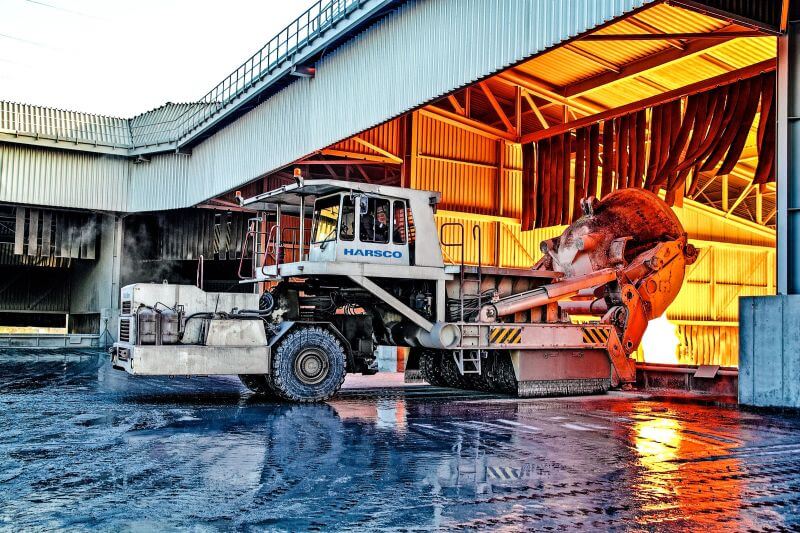
At Tosyali Harsco, a Turkish metal recycling center, safety around heavy machinery like cranes is a top priority. They improved both productivity and safety by monitoring the real-time location of cranes, their loads, and nearby vehicles.
This allows the company to improve crane utilization, reduce downtime and prevent accidents caused by vehicles moving near cranes. The result is a faster and safer operation.
Common Pushbacks and How to Address Them
While many manufacturing leaders have embraced Lean, others are still skeptical about its positive impact on safety. Here are some common concerns and how to address them:
“Lean pushes people harder — it’s unsafe.”
This concern often arises from “bad Lean” practices that prioritize speed at all costs. True Lean aims to eliminate overburden and ensure that workers aren’t placed under undue pressure. It doesn’t strive to speed up production at the expense of safety but rather work smarter to avoid unnecessary fatigue or risky shortcuts.
“We’re too busy for safety Kaizens.”
The truth is injuries and downtime cost money. Safety Kaizens are an investment in long-term productivity. By empowering workers to improve safety in small, manageable steps, you’ll avoid bigger, more costly accidents down the line.
What You Can Do Starting Tomorrow
If you're thinking about how to make your factory both leaner and safer, here are a few basic steps to integrate Lean principles into your safety protocols:
- Start a 5S audit focused on safety hazards — Walk through your facility and identify potential hazards that could lead to accidents. Then apply 5S principles to eliminate them.
- Add safety to your Gemba walks — When you conduct Gemba walks to look for inefficiencies, also look for safety hazards. Make it a habit to fix any issues you spot immediately.
- Empower your workers to suggest safety improvements — Use Kaizen events to encourage employees to suggest small, safety-related improvements. Create a suggestion box or digital system for submitting ideas.
- Track safety KPIs alongside production metrics — Include injury rates, near-miss reports, and ergonomic assessments as key performance indicators (KPIs) in your Lean reporting.
Efficiency and Safety: Two Sides of the Same Coin
Every injury is one too many. Safety isn’t an afterthought or a side project; it’s a core component of any efficient, Lean system. By adopting principles like 5S, Kaizen and Standardized Work, you create a safer work environment, which in turn reduces downtime and increases overall productivity.
Remember, when you eliminate accidents, you eliminate waste. When your employees are safe and empowered to help improve processes, you unlock higher productivity plus a stronger, more engaged workforce.
If you haven’t started yet, now’s the time to integrate Lean and safety into one unified system. After all, the most efficient factories are also the safest.
Next, explore how digitalization helps Lean accelerate the data flow to keep pace with production. Download our ebook Digital Lean: How Real-Time Data Accelerates Kaizen.
Read Next
ebook
Digital Lean: How Real-Time Data Accelerates Kaizen
Automation has accelerated production, but information flow hasn’t kept pace with the speed. Discover how digitalization closes the gap.
case study
Toyota Motors Becomes the Pioneer of Digitizing Lean
Having perfected Lean, Toyota is now bringing it into the digital age. HID Sewio RTLS helps to achieve a truly Just-in-Time operation.
article
Traceability in Industry 4.0: Expectations vs. Reality
What digitalization set out to deliver and what plants usually get.