One RTLS, Seven Ways to Run a Better Plant
A single RTLS infrastructure boosts ergonomics, efficiency and maintenance at the VELUX Commercial plant in Denmark.
At a Glance
Industry: Construction products
Location: Denmark, EU
Use cases: Workstation monitoring, ergonomics, process analysis
Products used: HID Sewio RTLS, Ultra-Wideband (UWB)
Background
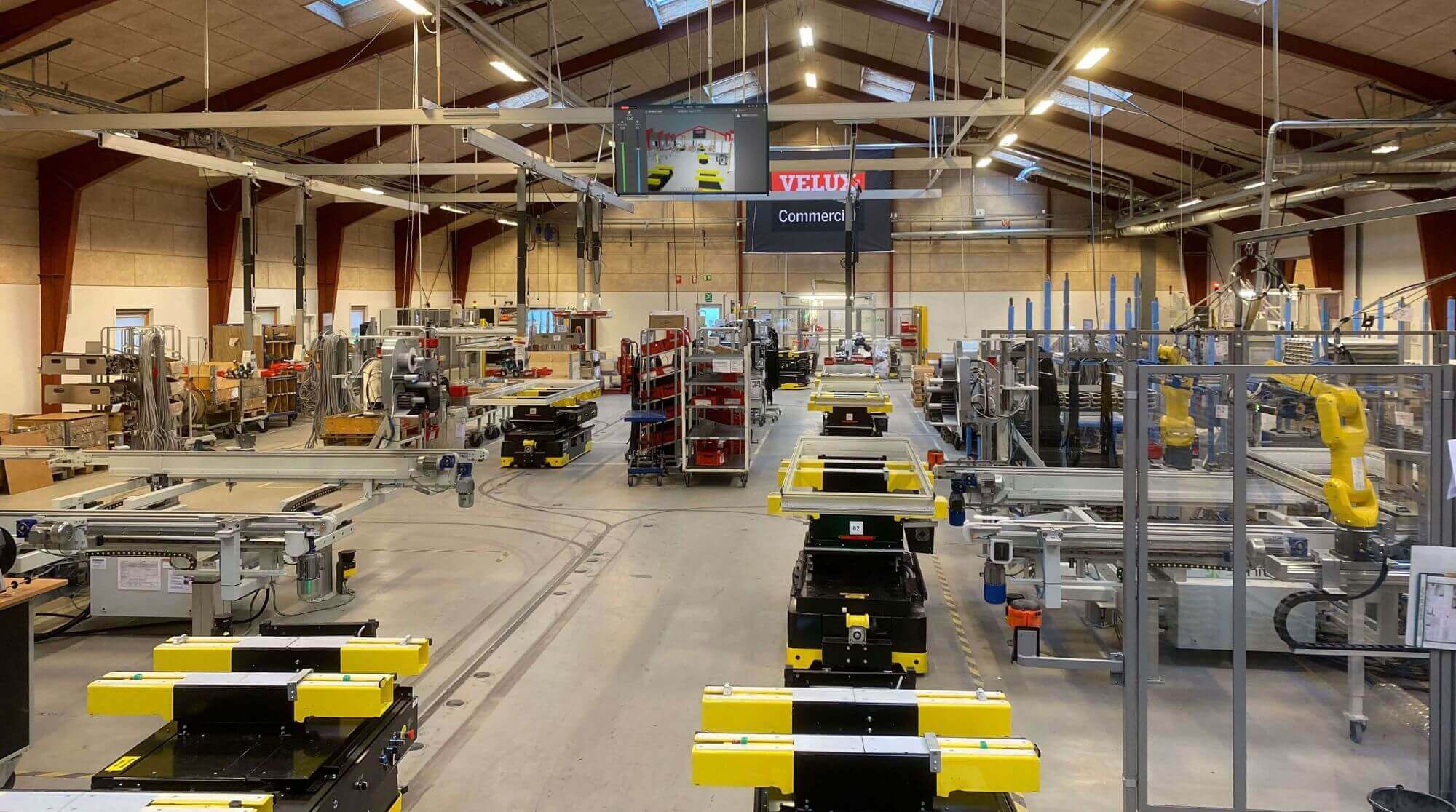
VELUX is a Danish company best known for roof windows, skylights and sun tunnels, which are light tubes that bring daylight into rooms with no windows at all. At its plant in Østbirk, Denmark, they build modular skylights for industrial, commercial and public buildings. No two orders look alike, so managers has to know exactly where every part is.
Work that was once done mostly by hand is now semi-automatic or fully automatic. Faster, yes. But when people, automated guided vehicles (AGVs) and machines share one factory floor, someone has to make sure they all work together.

Challenges
At the start of the digitalization project, there was a simple need: increase production volume and work more efficiently.
The team decided to achieve their goals by removing waste such as needless walking, waiting and delays that could have been prevented if found on time. The plan was to collect real-time data on how people, vehicles and machines actually move through the plant, then use it to make better daily decisions. Safer, more comfortable work for operators was part of the deal, too.
Why VELUX Commercial Chose HID Sewio RTLS
30 cm accuracy
UWB technology, reliable even among metal racks and machinery
Unlimited virtual zones
Virtual zones can be defined and easily updated
Open API
Documented, two-way integration with third-party systems
Proven in the field
Over 10 years of Ultra-Wideband (UWB) experience
Direct support
Multi-level support from the people who built the product
Easy to scale
Expanding the system is possible without a rebuild
Solution
VELUX Commercial installed the HID Sewio Real-Time Locating System (RTLS) that tracks the location of workers, AGVs, forklifts and machines across both of their production halls.
On top of that location data, our integration partner CEIT built a layer of applications. The RTLS tells the system where everything is at any given moment. The Ella platform by CEIT turn that data into actionable insights.
1. Automatic Height Adjustment for AGVs
Outcome: Improved ergonomics and faster task completion
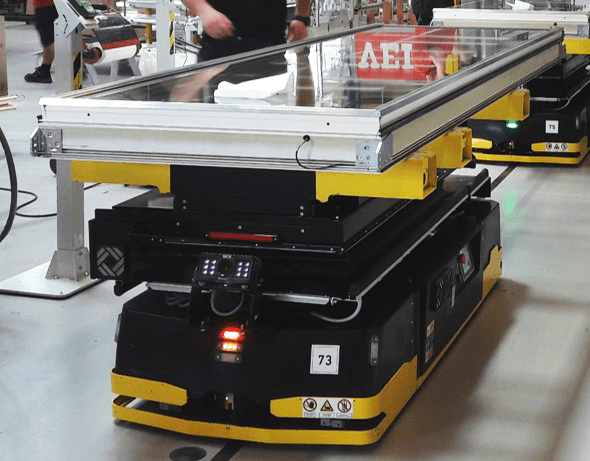
The AGVs at VELUX carry window frames across the halls with a gripper, and they double as workbenches. The RTLS knows who is standing at the workstation. When an AGV arrives, it raises or lowers itself to match that person's height. If a machine is there instead, it adjusts to the machine.
2. Workstation Monitoring
Outcome: 10% higher productivity
Every workstation needs the right number of operators, with the right skills, and nobody can work past their maximum time. The RTLS shows who is at each station, so the system can check all three conditions continuously.
If an AGV arrives and waits too long for a worker, the system sends a notification. The call shows up on monitors in the hall and in the application. The same happens when a worker with the right skills is missing, or when a production step takes longer than usual: the system calls in extra support with the right skills. Production managers see the status of every zone on one screen, without walking the floor to find the problem.
3. Guided Maintenance
Outcome: 50% better performance in TPM activities
The Total Productive Maintenance (TPM) application can store all data in one place: standards for daily and long-term tasks, logbooks, machine locations, reports and worker qualifications.
The system navigates the operator to the machine. After a task, the system builds a report that compares the plan with what really happened. The operator's position confirms the task was done on the right machine. The report also records how long it took, which materials and lubricants were used and any issues found.
4. Virtual Reality Training
Outcome: New operators get up to speed 25% faster
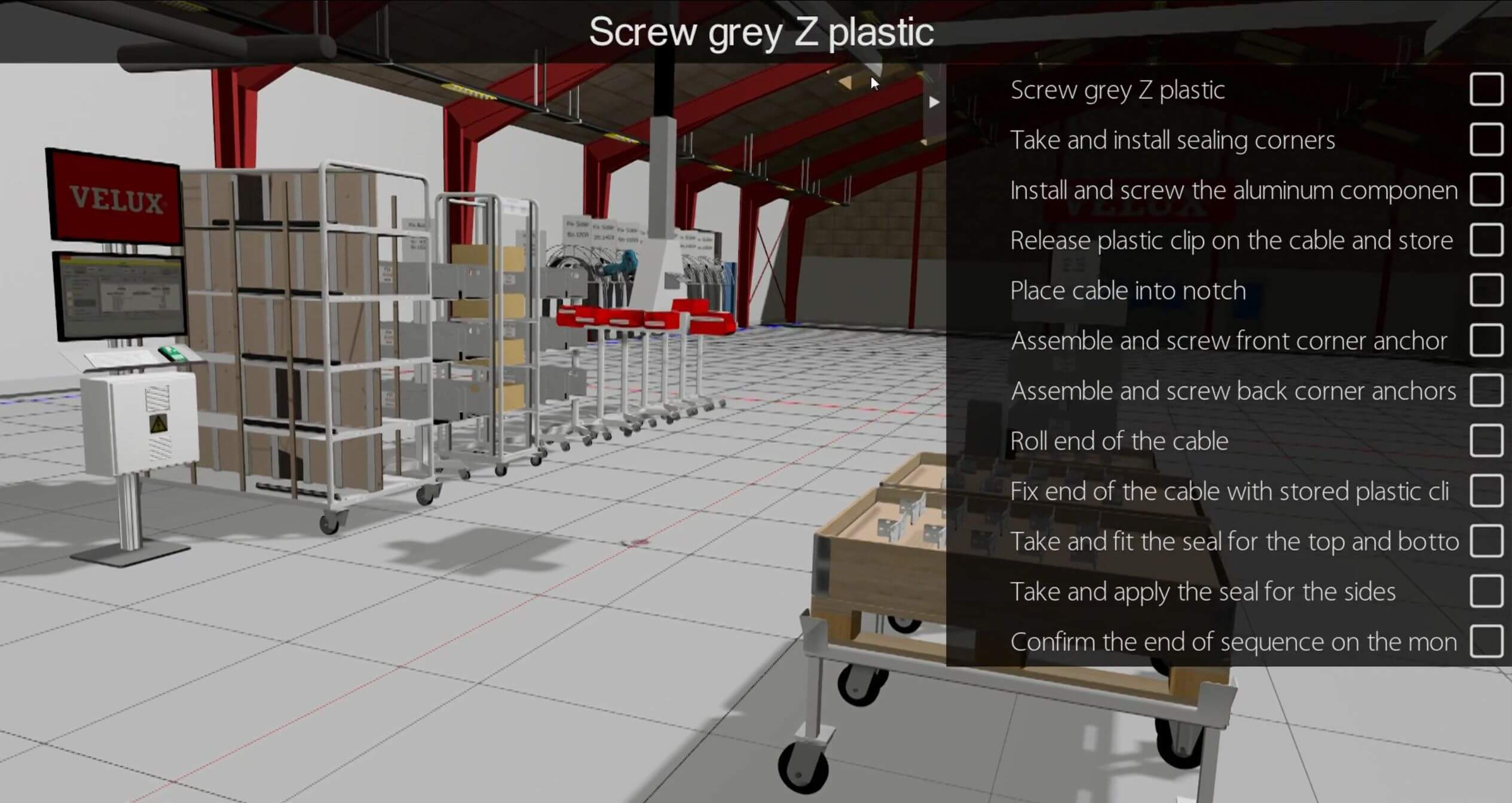
VELUX uses a digital twin, a 3D copy of the plant, for virtual reality training. The RTLS feeds it real movement data, so the copy behaves like the real halls. In point-of-view mode, a trainee sees an AGV approaching a workstation. A monitor shows the next steps, and the trainee practices them. This way, trainees see what a real shift looks like with no risk to people or production.
5. Movement Analysis
Outcome: 10% fewer unfinished products waiting between stations
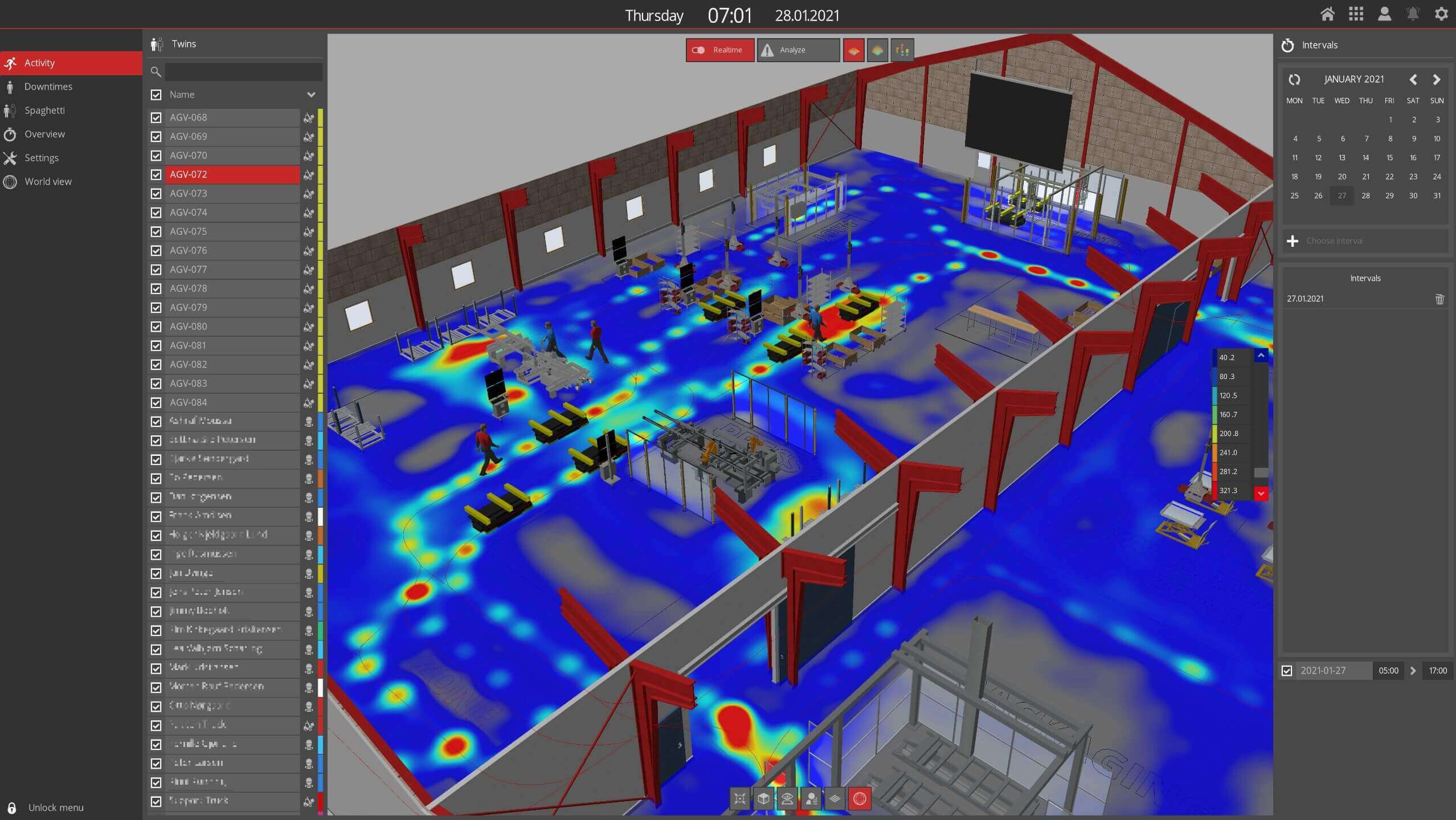
Two tools turn movement data into pictures. A spaghetti diagram draws one continuous line along the path of each worker or AGV. A tangled knot means wasted steps. Process teams use it to spot repeated walking and find ways to speed up the flow.
A heatmap shows how busy each part of a hall is. Warm colors mark where traffic and labor concentrate over time. Managers see at a glance where people cluster, where paths cross and where there is room for improvement.
6. New Process Simulation
Outcome: Improved planning and decision-making
Before changing a process, VELUX tests it in a simulation that combines RTLS location data with production data from other systems, such as SAP. Together, they let managers find the constraints and bottlenecks, so they can calculate how much capacity the production and logistics resources really have.
Production managers use it to plan each day's production and choose the variant that meets customer demand most efficiently.
7. Live Dashboards
Outcome: One source of truth for planning and decisions
Plant and production managers use a real-time dashboard for planning, monitoring and improving production. It shows current and historical data on key performance indicators (KPIs), so managers can see quickly how things stand.
Results
With the HID Sewio RTLS in place, VELUX Commercial gained a live picture of where people, vehicles and machines are at any given moment.
Thanks to that, AGV workbenches now adjust to each operator's height. Problems get caught earlier, and when a station is short of people or a step runs long, the system sees it and calls for help. Maintenance can be verified, because a technician's position confirms that the right person has reached the right machine. Spaghetti diagrams, heatmaps and simulations show where time and effort are wasted.
Instead of solving each of these issues separately, VELUX built one location infrastructure and used the same data for ergonomics, staffing, maintenance and process improvement.
Business Impact
-
10% increase in productivity
-
50% performance boost in Total Productive Maintenance
-
10% less work-in-progress
-
25% shorter onboarding process for operators

Ella platform, powered by HID Sewio RTLS, has opened a whole range of use cases that we're continuously delivering. With every step, we're reaching a higher level of digital maturity, increasing efficiency and—most importantly—gaining a competitive advantage.
Similar plant, similar problems? Let's work it out together.
Read Next
technology
Ultra-Wideband (UWB)
Precise, fast and reliable geolocation technology for industrial halls and warehouses. Geolocation data is used to increase efficiency, cut search time, improve safety and simplify audits.
Solution
Work-in-Progress Tracking
RTLS work-in-progress visibility helps you prevent bottlenecks, avoid downtime and plan with confidence. No scanning, no paperwork.
case study
Marmon Foodservice Technologies
The global company used UWB RTLS to build a smart factory that adapts swiftly to changing market demands.